

New 10 AI Prompts for Women’s Exotic Travel Adventure Imagery
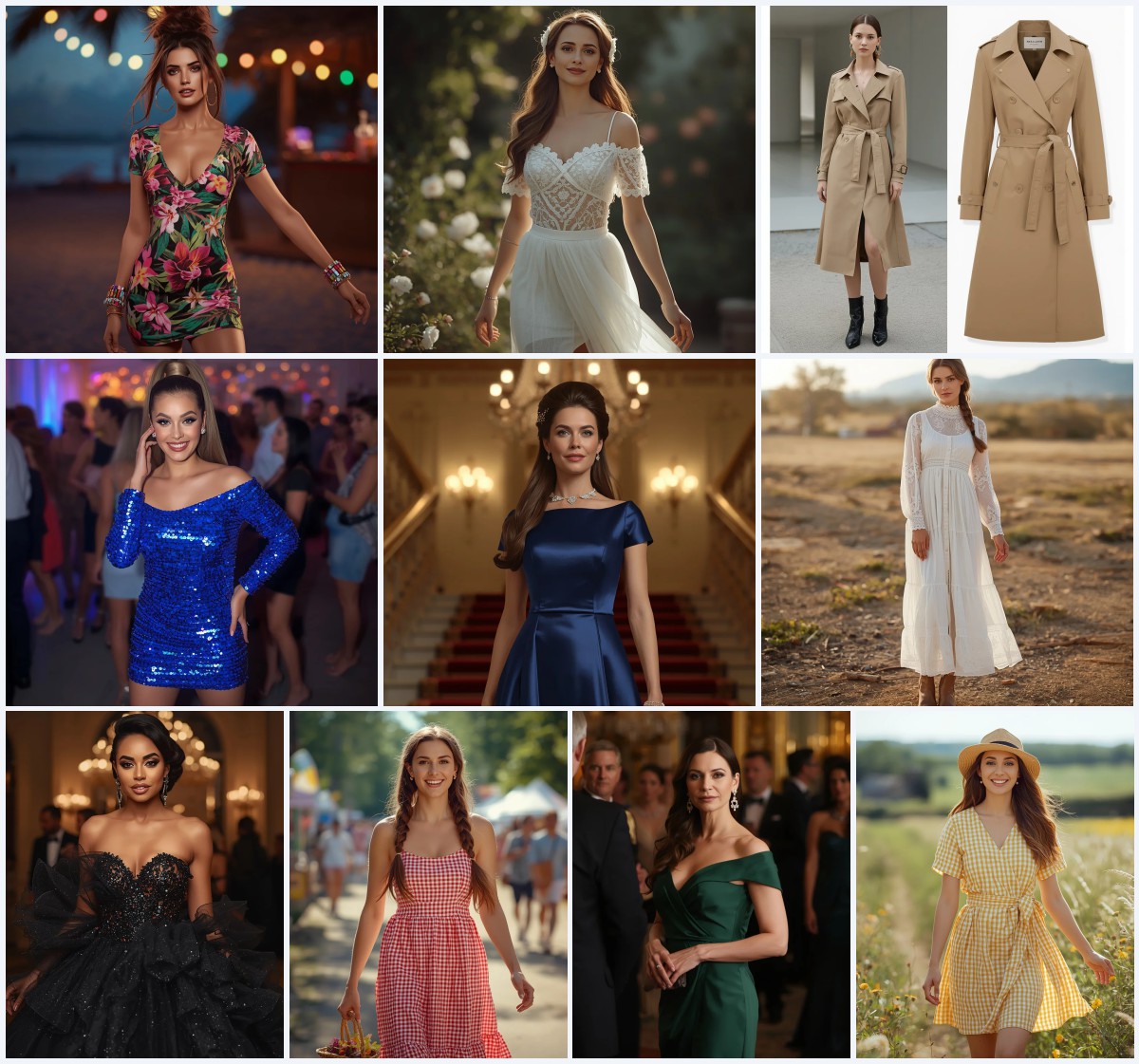
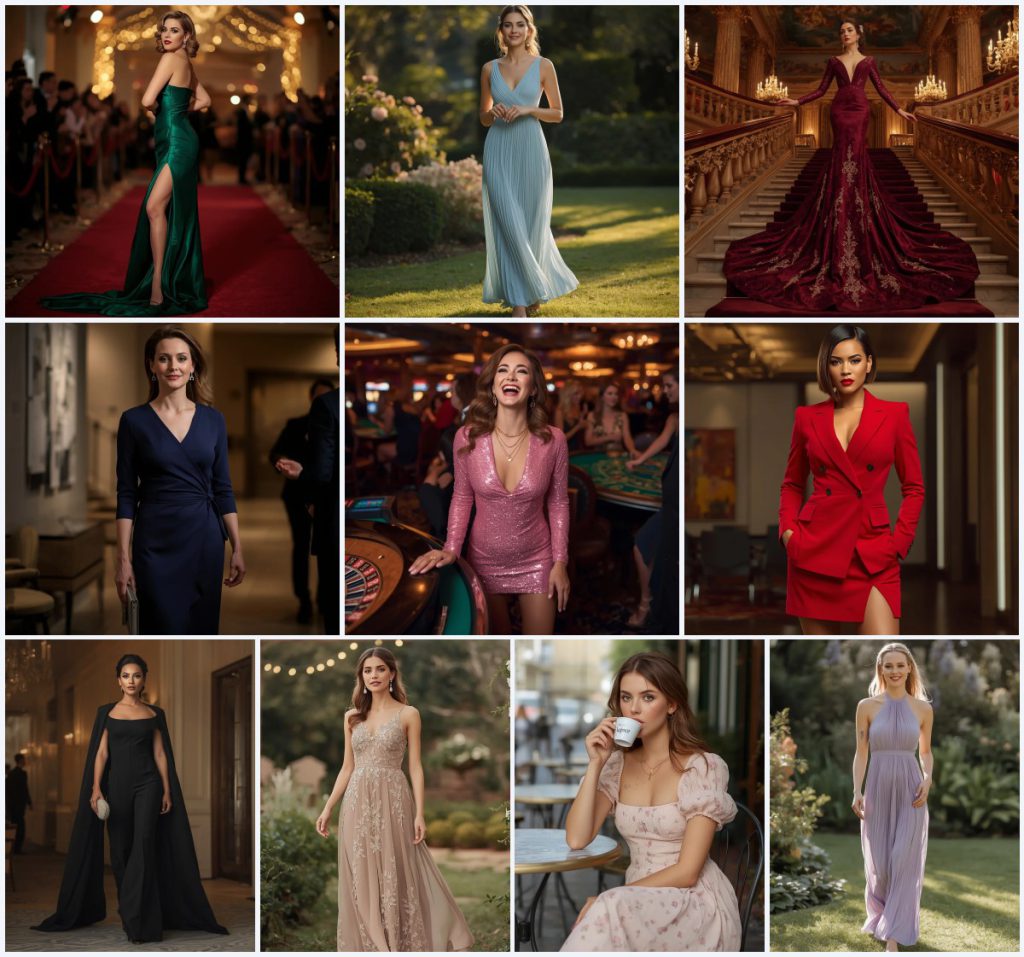
This collection gathers ten distinct AI image prompts, each placing a woman in a different elegant setting, from a red carpet and an opera house to a casino floor, a Parisian cafe, and a garden wedding. The prompts share a clear formula: a named garment, a specific pose, a described background, and camera-like lighting notes. That formula is what makes them reliable for generating polished, magazine-style portraits rather than random glamour shots.
Below you will find one article that treats the whole set as a single visual system. It explains what the prompts ask for, how the scenes differ, which styles stay inside the text, and how to run the prompts in common tools. You will also get practical checks for hands, face, and the main object, plus fixes for the failures these prompts tend to produce.
What these ten glamour prompts are asking for
Each prompt in this collection builds a full-body portrait around a named dress or outfit and a named location. The wording is specific about fabric, silhouette, posture, and light, which gives the model enough anchors to keep the image coherent. The result is a set of images that feel like they belong to one editorial shoot, even though the locations range from a casino to a botanical garden.
- A named garment such as an emerald green silk gown with a thigh-high slit, a pastel blue pleated maxi dress, a burgundy mermaid gown, or a black jumpsuit with cape sleeves.
- A described pose, including a statuesque turn of the head, a full-body walking pose, a regal descent of a grand staircase, or a confident stance with one hand in a pocket.
- A specific background, such as blurred festive lights at a red carpet event, a sun-dappled garden, a frescoed opera house interior, a modern hotel lobby, a roulette table, or a Parisian cafe.
- Hair and makeup details, from classic Hollywood waves and a bold red lip to an elaborate updo with diamond hairpins or loose natural waves with fresh-faced makeup.
- Lighting language, including dramatic cinematic lighting, warm diffused light, soft professional lighting, and low-key lighting with a 50mm lens at f/1.8.
- Accessories that finish the look, such as minimal diamond jewelry, delicate gold layered necklaces, pearl drop earrings, a small embellished clutch, or strappy high heels.
The shared scene across the set
Every prompt places one woman at the center of a social event, and the event dictates the clothing. The red carpet prompt uses "blurred, festive lights in the background" and "dramatic cinematic lighting" to sell luxury. The casino prompt uses "a lively blur of spinning roulette wheels, poker tables, and other elegantly dressed patrons" to sell energy. The Parisian cafe prompt uses "classic Parisian architecture, charming cafe tables, and a soft, diffused morning light" to sell romance.
The camera language is consistent enough to treat the set as one shoot. Several prompts name a lens and aperture, such as "Photographed with a 50mm lens, f/1.8" or "Photographed with an 85mm lens, f/2." That repetition matters because it tells the model to render shallow depth of field and natural skin texture instead of flat, over-smoothed glamour.
Why this set works for exotic travel and event imagery
The prompts work because they combine a strong subject anchor with a strong place anchor. A named dress and a named venue give the model two independent constraints, which reduces the chance that it invents a generic background or a random outfit. That is the main reason these images read as travel-and-event photography rather than studio portraits.
- The garment names are precise, so the model can render fabric behavior like the flow of a pleated maxi dress or the sharp lapels of a crimson power suit dress.
- The locations are described with real architectural and lighting cues, so the background supports the story instead of competing with the subject.
- The pose and expression instructions keep the figure readable in a full-body frame, which is harder to get right than a close-up headshot.
Three styles that stay inside this prompt set
This collection supports three clear styles, and all three stay inside the text as written. Do not push the model toward a different genre, because the prompts already define the genre through garment, venue, and lighting. Pick one of these three and keep the rest of the wording intact.
- Cinematic red carpet glamour: Use the emerald green silk gown prompt with its dramatic thigh-high slit, Hollywood waves, and blurred festive lights to get a high-contrast, event-photography look.
- Soft garden romance: Use the pastel blue or pastel lavender pleated maxi dress prompts with sun-dappled gardens, floral pins, and warm diffused light for an ethereal, natural result.
- Opulent interior formality: Use the burgundy mermaid gown or the black jumpsuit with cape sleeves, paired with frescoed ceilings, marble columns, crystal chandeliers, and warm glowing light for a regal, architectural image.
How to run these prompts step by step
The workflow is the same for every card in the set. Start with the exact prompt text, add a reference only if you need a specific face or body type, then generate and inspect the result before you refine. The inspection step is where most of the quality comes from, because these prompts produce complex full-body scenes with several failure points.
- Copy the prompt. Take the full text of the card you want, including the garment, pose, background, and camera notes, and paste it into your tool without trimming the lighting sentence.
- Upload a reference. If you need a consistent face, upload a clear, well-lit portrait and describe it as a reference for facial features only, so the model does not copy the reference background.
- Generate the first pass. Run one image at a time at a high resolution and a wide aspect ratio, because these are full-body compositions that need vertical or square framing.
- Check the hands. Look at clasped hands, a hand in a pocket, or hands holding a clutch, since the prompts mention these poses and models often merge fingers.
- Check the face. Confirm the expression matches the prompt, such as a calm and joyful look or a direct and intelligent gaze, and that the makeup matches the named lip and eye style.
- Check the main object. Verify the dress silhouette, the slit, the train, the pleats, or the cape sleeves, and regenerate if the garment shape has drifted from the prompt.
Choosing a reference photo for these prompts
A reference photo is optional, but if you use one, it should match the framing and lighting of the target image. These prompts ask for full-body poses and event lighting, so a tight selfie with harsh flash will fight the prompt. A mid-body or full-body shot with soft, even light gives the model the best chance to keep the face while following the scene description.
- Use a full-body or three-quarter-body photo so the model can map the pose, since the prompts specify standing, walking, or descending a staircase.
- Use soft, even lighting on the face, because the prompts already define dramatic or diffused scene lighting and a conflicting reference light can flatten the result.
- Keep the background simple and uncluttered, so the model does not blend a reference room into the opera house, casino, or garden described in the prompt.
Which tools handle these prompts best
All four tools below can run these prompts, but they differ in how much control you get over the final image. ChatGPT and Google Gemini are convenient for quick iterations and wording adjustments. Leonardo AI and Midjourney give stronger photographic realism and better handling of fabric and light, which matters when the prompt names silk, sequins, pleats, or lace appliques.
| Tool | Access | Typical realism | Useful here for |
|---|---|---|---|
| ChatGPT | Web and app, paid tiers for image generation | Good for concept and composition | Rewriting the casino prompt to emphasize the pink sequin mini dress and the roulette table blur. |
| Google Gemini | Web and app, free and paid tiers | Good for natural light scenes | Generating the garden wedding prompt with lace appliques and twinkling fairy lights. |
| Leonardo AI | Web app, free credits and paid plans | Strong photographic detail | Rendering the emerald green silk gown with a dramatic thigh-high slit and cinematic red carpet lighting. |
| Midjourney | Discord and web, paid subscription | Very strong realism and fabric texture | Producing the burgundy mermaid gown on the grand opera staircase with chandelier light. |
Three practical tips for cleaner results
Small wording changes make a large difference with these prompts. The garment and the background are the two elements most likely to drift, so protect them first. The tips below name real objects from the set so you can apply them directly.
- Keep the fabric description intact, because phrases like the flow of a pleated maxi dress or the shimmer of a pink sequin mini dress control how the model renders light on cloth.
- Keep the accessory list short and named, such as delicate pearl drop earrings or a small embellished clutch, since too many unnamed accessories cause the model to invent clutter.
- Keep the camera note, such as a 50mm lens at f/1.8 or an 85mm lens at f/2, because it pushes the render toward shallow depth of field and away from a flat, poster-like look.
Common failures and what to change
These prompts are detailed, but they still fail in predictable ways. Most failures come from too much scene description competing with the figure, or from pose instructions that the model cannot resolve cleanly. Use the table below to diagnose and fix the most likely problems.
| Issue | What to change |
|---|---|
| The dress silhouette drifts, so a mermaid gown becomes a generic long dress | Repeat the garment name and its key feature, such as the dramatic train or the empire waist, and remove any extra clothing words. |
| The hands merge or gain extra fingers in a clasped or pocket pose | Simplify the pose wording to one clear hand action and regenerate, then check the hands before upscaling. |
| The background overwhelms the subject, especially in the casino or opera house scenes | Add a phrase like softly blurred background and keep the subject in the foreground, since the prompt already describes a lively blur or a lavish interior. |
| The face looks over-smoothed and loses the named makeup | Restate the makeup detail, such as a bold red lip or a subtle smoky eye, and lower any beauty-retouch setting in your tool. |
Frequently Asked Questions
Can I use one prompt from this set and ignore the rest?
Yes. Each card is self-contained, so you can run the Parisian cafe prompt or the opera house prompt on its own. The collection is a set of options, not a sequence, and the shared formula means any single card will still produce a coherent image.
Why do these prompts mention a lens and aperture?
The lens and aperture notes, such as a 50mm lens at f/1.8 or an 85mm lens at f/2, tell the model to render shallow depth of field and natural skin texture. Removing them often produces a flatter, more poster-like image with less separation between the subject and the background.
What should I do if the generated woman does not match the described dress color?
Restate the color and the garment in one short sentence near the start of the prompt, for example the pastel lavender pleated maxi dress, and remove any competing color words. Color drift usually happens when the scene description contains strong colors of its own.
Conclusion
This set of ten prompts is strongest when you treat it as one flexible system: a named garment, a named venue, a clear pose, and a camera note. Keep those four elements intact and you can move between a red carpet, a casino, a garden wedding, and a Parisian cafe without losing the editorial quality. Run one card at a time, check the hands, face, and main garment, and refine only the part that failed.
Only edit and publish photos you have the right to edit, such as your own images or ones with clear permission from the person pictured.