

Best 10 AI Prompts for Abstract Geometric Art with Bold Forms
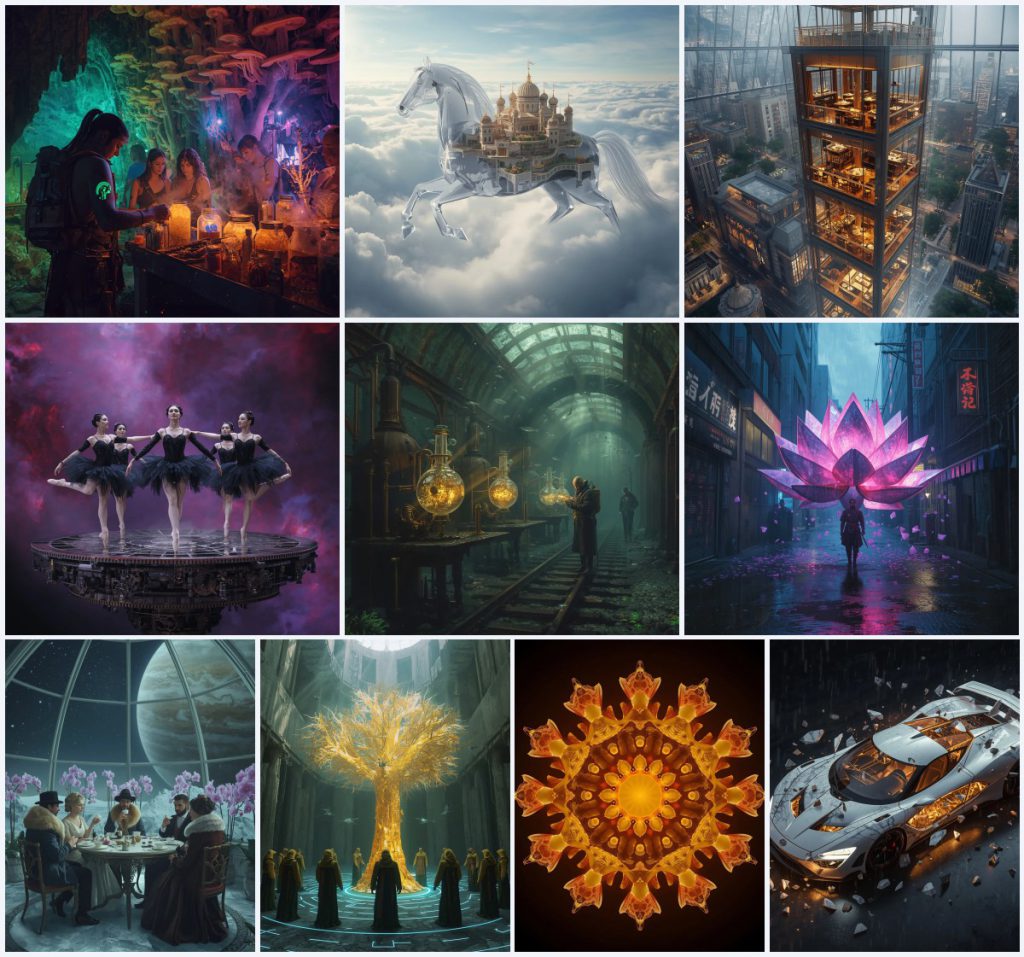
The best 10 AI prompts for abstract geometric art with bold forms is a collection that pushes scale, material contrast, and impossible architecture into one visual language. Across the ten prompt titles, you meet a crystal horse carrying a gourmet kingdom, a glass elevator moving through culinary realities, cyber-gothic ballerinas on clockwork gears, deep-sea alchemists brewing liquid starlight, and a neon-glitch samurai guarding an origami lotus. The shared scene is a world where geometry becomes the main character, whether it is a floating mandala of molecular food or a hypercar breaking into fractal marble fragments.
This article treats the set as one body of work because the prompts share a single obsession: bold forms that are polished, suspended, and lit like premium commercial renders. You will see how to read the prompt text, how to keep the reference photo useful, and how to correct common AI failures such as melted hands, flattened depth, and random text. The goal is not to copy every title but to understand the visual grammar that makes these ten prompts work together.
What this abstract geometric art collection is asking for
Each prompt in this collection asks for a high-contrast, premium-tier image where bold geometric forms dominate the composition. The subjects range from a giant transparent crystal horse to a colossal glass elevator, but the visual rules stay consistent: polished surfaces, suspended fragments, saturated light, and a sense of impossible scale. The prompts also mix organic and mechanical elements, so you get glowing mushrooms beside leather armor, or black lace tutus above ticking brass gears. The result should feel like a luxury campaign for a world that does not exist.
- A giant transparent crystal horse with a luxury gourmet kingdom built across its back.
- A colossal transparent elevator moving vertically through different gastronomic realities.
- Cyber-gothic ballerinas in black lace and obsidian-studded tutus dancing on interlocking clockwork gears.
- Victorian alchemists in leather diving suits distilling glowing liquid starlight inside a flooded railway station.
- A neon-glitch samurai with pixel armor protecting a 30-foot-tall origami lotus in a rain-slicked alley.
- A hypercar deconstructing into floating white marble fragments and gold-leafed geometric shards.
Reading the shared scene across the ten prompts
The collection moves through radically different environments, but each one is built on a bold geometric anchor. In the crystal horse prompt, the anchor is the horse itself, described as "larger than mountains" and galloping through "an ocean of clouds." In the glass elevator prompt, the anchor is vertical motion through "different gastronomic realities," where "each level reveals a luxury culinary world." The cyber-gothic ballerinas prompt turns the stage into "a colossal, floating platform constructed entirely from thousands of interlocking, rotating, and ticking brass-and-iron clockwork gears."
Other prompts push the same logic into stranger territory. The deep-sea alchemists work inside "a flooded, abandoned railway station at the bottom of the ocean," using "massive, intricate glass alembics to distill a glowing, blindingly bright liquid starlight." The neon-glitch samurai stands in "a narrow, rain-drenched alleyway of a futuristic Tokyo-style megacity," protecting "a gargantuan, 30-foot-tall origami lotus flower." Even the food prompt turns a gourmet meal into "a massive, levitating geometric mandala" where every component is "suspended in its own translucent, glowing energy field."
Why these bold geometric forms work so well
These prompts work because they give the model clear geometric anchors instead of vague mood words. A crystal horse, a glass elevator, clockwork gears, and fractal marble fragments are all shapes the model can build, scale, and light. That clarity is why the collection feels cohesive even though the subjects are wildly different.
- The prompts name specific materials such as crystal, glass, brass, marble, and gold leaf, which gives the renderer something concrete to reflect and refract.
- The compositions rely on scale contrast, like a mountain-sized horse or a 100-foot holographic tree, which creates instant drama without needing complex storytelling.
- The lighting instructions are tied to the geometry, so the glow from plasma, starlight, or bioluminescent mushrooms has a physical source inside the frame.
Three styles that stay inside this collection
You can push these prompts in three directions without leaving the collection's visual rules. Each style below uses materials and lighting already named in the prompt text, so you are not inventing a new genre. Pick one style per generation and keep the geometric anchor intact.
- Premium commercial render: Lean into the luxury branding and photorealistic realism named in the crystal horse and glass elevator prompts, keeping surfaces polished and lighting cinematic.
- Surreal high-contrast fantasy: Use the bioluminescent mushrooms, iridescent spores, and deep purple nebula from the bazaar and ballerina prompts to create a dreamlike but sharply lit image.
- Cyber-gothic industrial: Combine the neon-pink pixel armor, rain-slicked asphalt, and clockwork brass from the samurai and ballerina prompts for a darker, mechanical mood.
How to run these prompts without losing the bold forms
The safest workflow is to treat each prompt as a complete recipe, then adjust only one variable at a time. Start by copying the full prompt text into your chosen tool, because the collection depends on specific materials, lighting, and scale words. If you want your own subject in the scene, upload a reference photo and describe how it should fit the geometry. Generate a first pass, then inspect the hands, face, and main object before you change anything else.
- Copy the prompt. Paste the full prompt text into your generator so the material and lighting clauses stay intact.
- Upload a reference. Add a reference photo only if you need a specific face, product, or pose, and describe its role in the scene.
- Generate a first pass. Run the prompt at a wide aspect ratio so the bold geometric anchor has room to breathe.
- Check hands. Zoom in on any hands in the frame, especially in the tea party, alchemist, and samurai prompts, and regenerate if fingers merge.
- Check face. Verify that faces keep the intended expression and that pixel armor or diving suits do not swallow facial features.
- Check the main object. Confirm the crystal horse, glass elevator, origami lotus, or fractal hypercar reads clearly before you refine smaller details.
Using a reference photo with these prompts
A reference photo is optional for most of these prompts, but it becomes useful when you want a specific person, product, or texture inside the geometric world. The prompts already describe materials in detail, so your reference should support the geometry rather than replace it. Keep the reference simple and well lit so the model can separate your subject from the bold forms.
- Use a sharp, evenly lit photo if you want a real face inside the Victorian tea party or the neon-glitch samurai scene.
- Avoid busy backgrounds in your reference, because the prompts already add complex environments like the bioluminescent fungal bazaar or the flooded railway station.
- Match the reference angle to the prompt's camera language, such as the macro lens and 100mm framing mentioned in the molecular mandala prompt.
Which tools handle these geometric prompts best
Different generators interpret material and scale words differently, so it helps to know what each tool is good at. The table below compares four common options using details that actually appear in this collection, from liquid starlight to fractal marble fragments.
| Tool | Access | Typical realism | Useful here for |
|---|---|---|---|
| ChatGPT | Free and paid tiers | Moderate to high | Drafting prompt variations for the crystal horse and glass elevator titles before you render. |
| Google Gemini | Free and paid tiers | Moderate | Quick concept checks for the bioluminescent fungal bazaar and the neon-glitch samurai alley. |
| Leonardo AI | Free credits and paid plans | High | Rendering polished materials like liquid starlight, brass clockwork gears, and glowing saffron-infused paneer. |
| Midjourney | Paid subscription | Very high | Capturing cinematic lighting and fractal marble fragments in the hypercar and ballerina prompts. |
Three practical tips for cleaner bold-form renders
Small adjustments to the prompt text can fix most of the problems you will see in these ten titles. The tips below focus on real objects and materials that already appear in the collection, so you are not adding new elements. Apply one tip at a time and compare the results.
- If the crystal horse looks flat, add a clause about refracted light passing through the transparent body, because the prompt already calls it a majestic transparent crystal horse.
- If the origami lotus loses its paper texture, emphasize the shimmering, iridescent paper and the petals that turn into digital code when they hit the wet pavement.
- If the molecular mandala looks cluttered, reduce the number of floating components and keep the glowing saffron-infused paneer and liquid-gold curry spheres as the main focus.
Common failures and what to change
These prompts are ambitious, so failures usually come from too much simultaneous complexity. The table below lists issues this collection can actually produce and the smallest change that helps. Fix one issue per generation so you can see what actually improved.
| Issue | What to change |
|---|---|
| Hands merge or gain extra fingers in the tea party and alchemist scenes. | Add a clause asking for relaxed, clearly separated hands, or crop the frame above the table. |
| The transparent crystal horse or glass elevator looks like frosted plastic. | Strengthen the refraction and reflection language, and specify sharp highlights on the glass edges. |
| The bioluminescent fungal bazaar turns into a flat green wash. | Limit the glow to radioactive green, orange, and neon-blue mushrooms and keep the spores as small floating motes. |
| The fractal marble hypercar loses its geometric shards and becomes a normal car. | Repeat the phrase floating, perfectly polished white marble fragments and gold-leafed geometric shards in the prompt. |
Frequently Asked Questions
Can I use these ten prompts for a single cohesive series?
Yes. Keep the same lighting language and material palette across all ten, such as polished surfaces and saturated cinematic light, so the crystal horse, glass elevator, and fractal hypercar feel like one collection.
Do I need to include every detail from the prompt text?
No. You can shorten the prompt, but keep the bold geometric anchor and at least one material clause, such as the brass-and-iron clockwork gears or the glowing liquid starlight, or the image will lose its identity.
Why do my renders keep adding random text or labels?
Some prompts in this collection explicitly ask for no labels, no text, and zero typography, so repeat those negative clauses in your tool's negative prompt field if the generator supports one.
Conclusion
This collection works because every prompt commits to a bold geometric form and then builds scale, material, and light around it. Whether you are rendering a crystal horse, a glass elevator, a clockwork stage, or a fractal hypercar, the same rules apply: keep the anchor clear, name the materials, and check the hands, face, and main object before you refine anything else. Use the tools and fixes above to turn these ten titles into a coherent body of abstract geometric art.
Only edit and publish photos you have the right to edit, and keep your reference images and generated outputs within the licenses you actually hold.