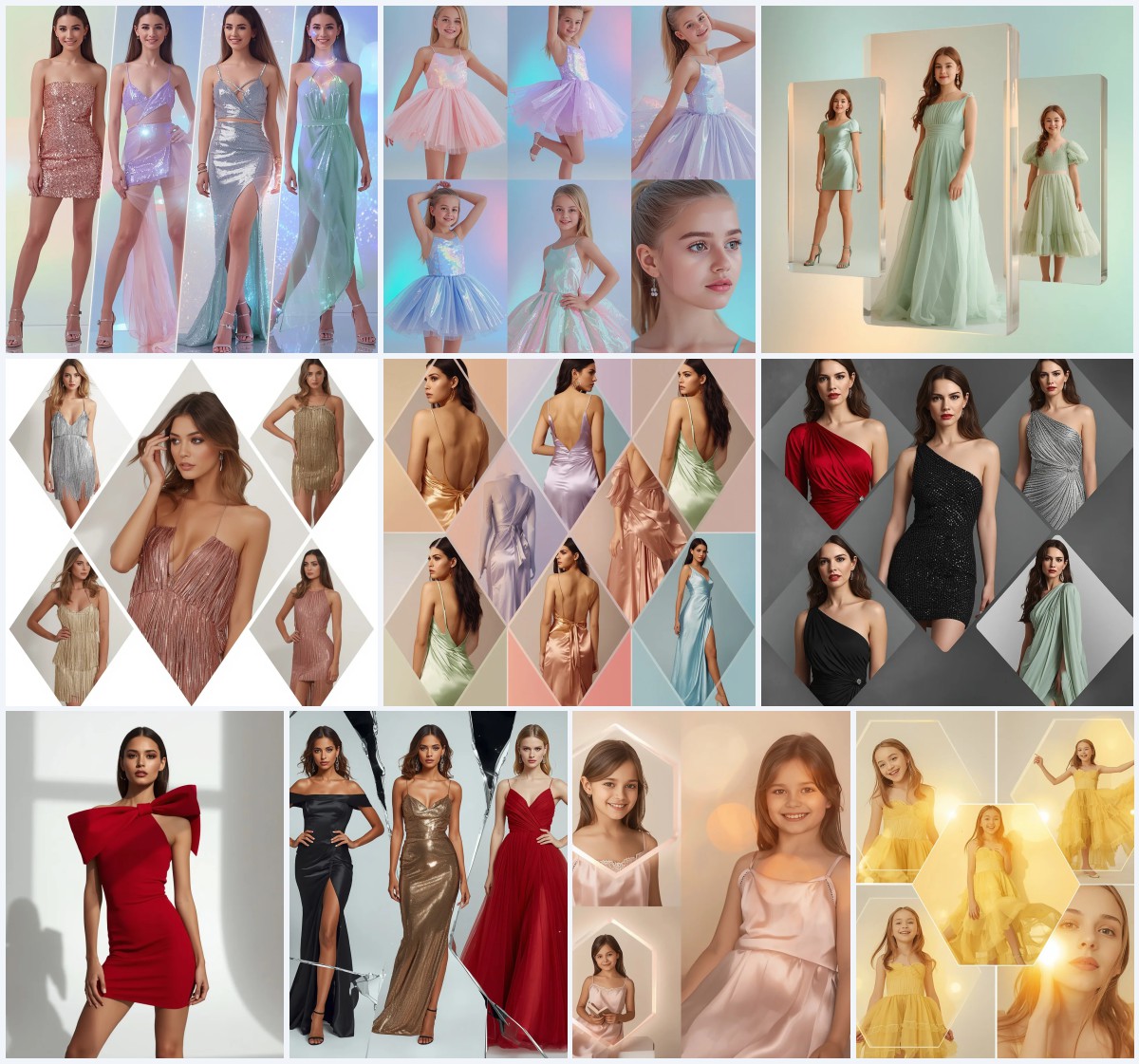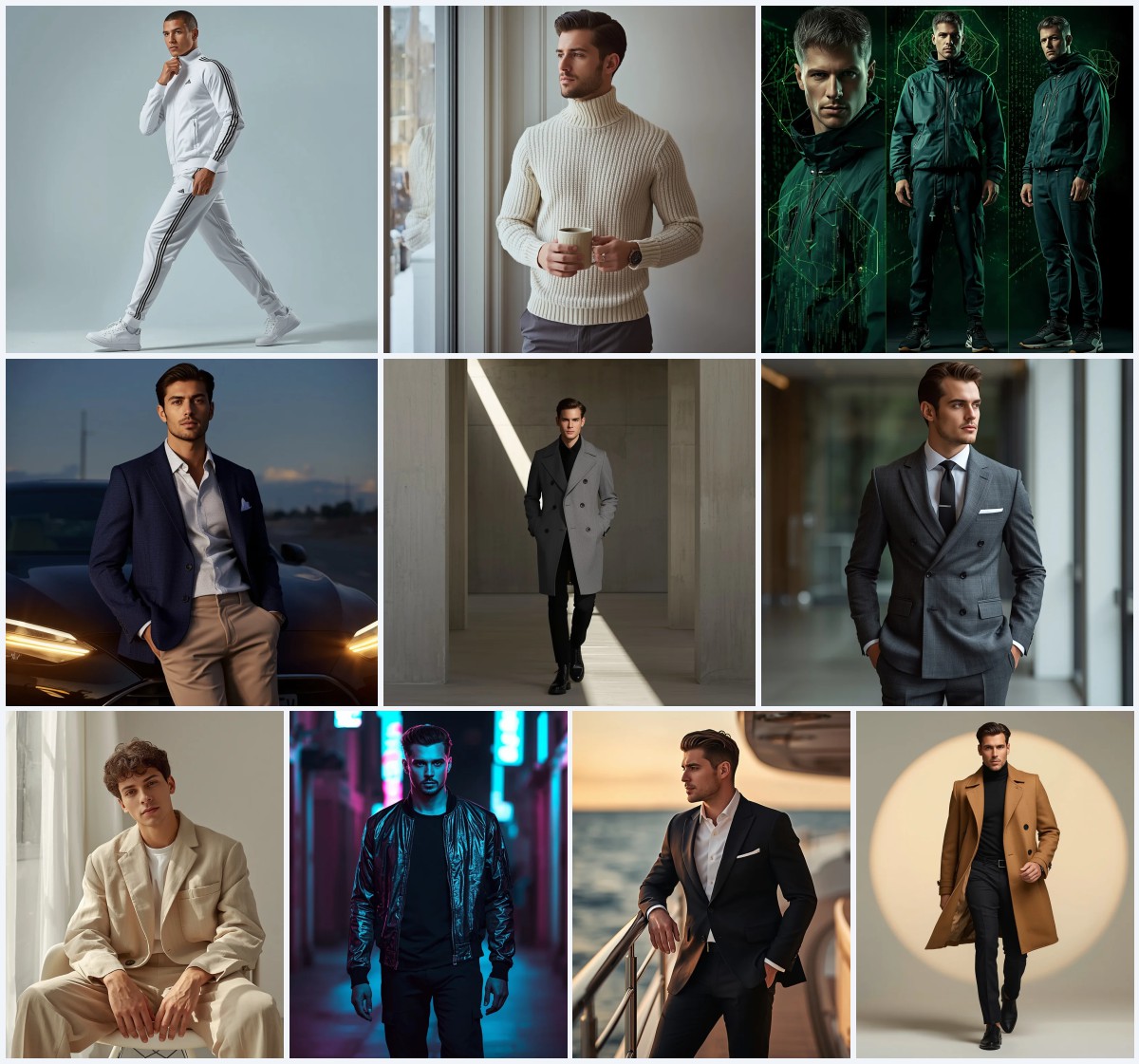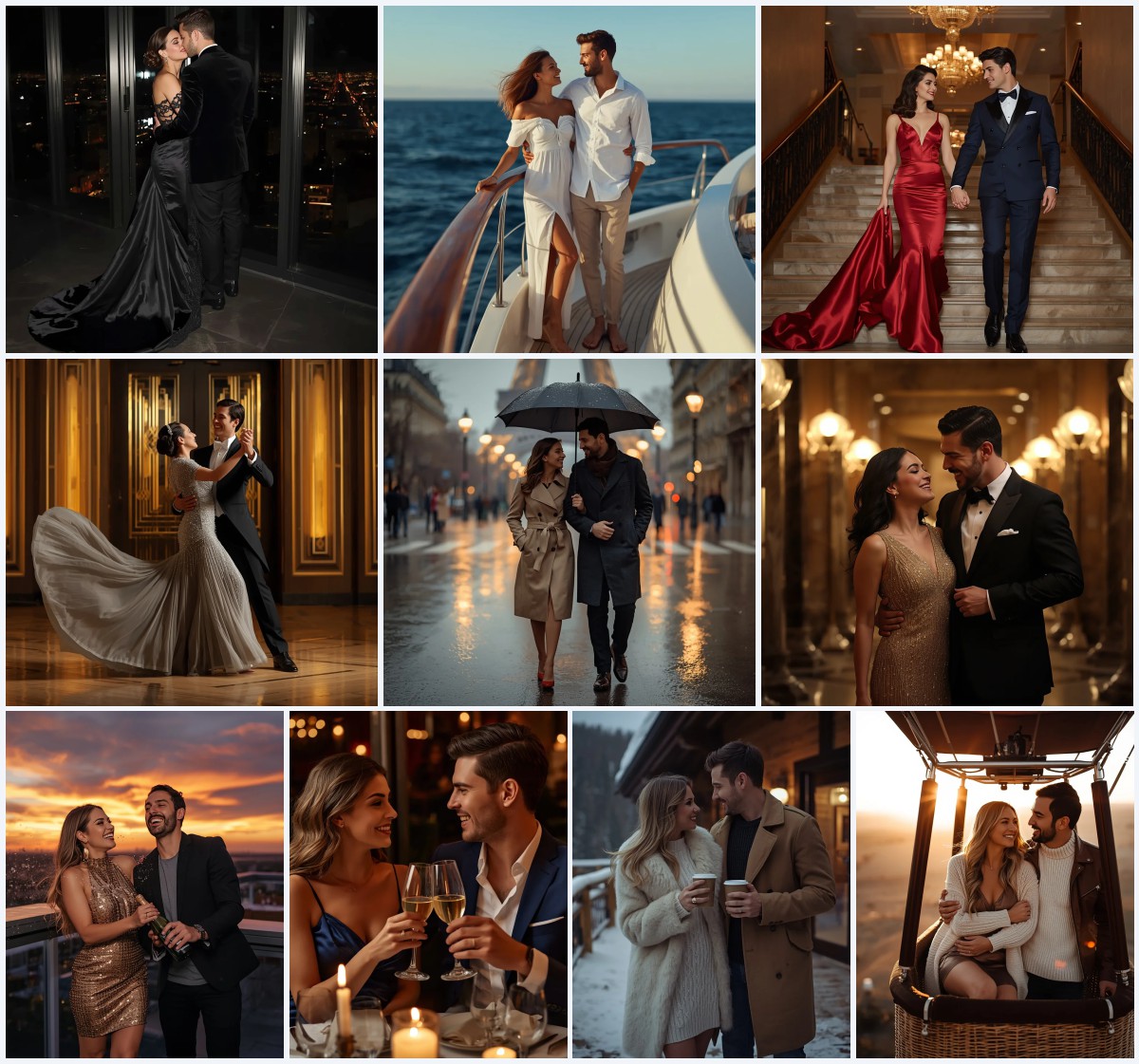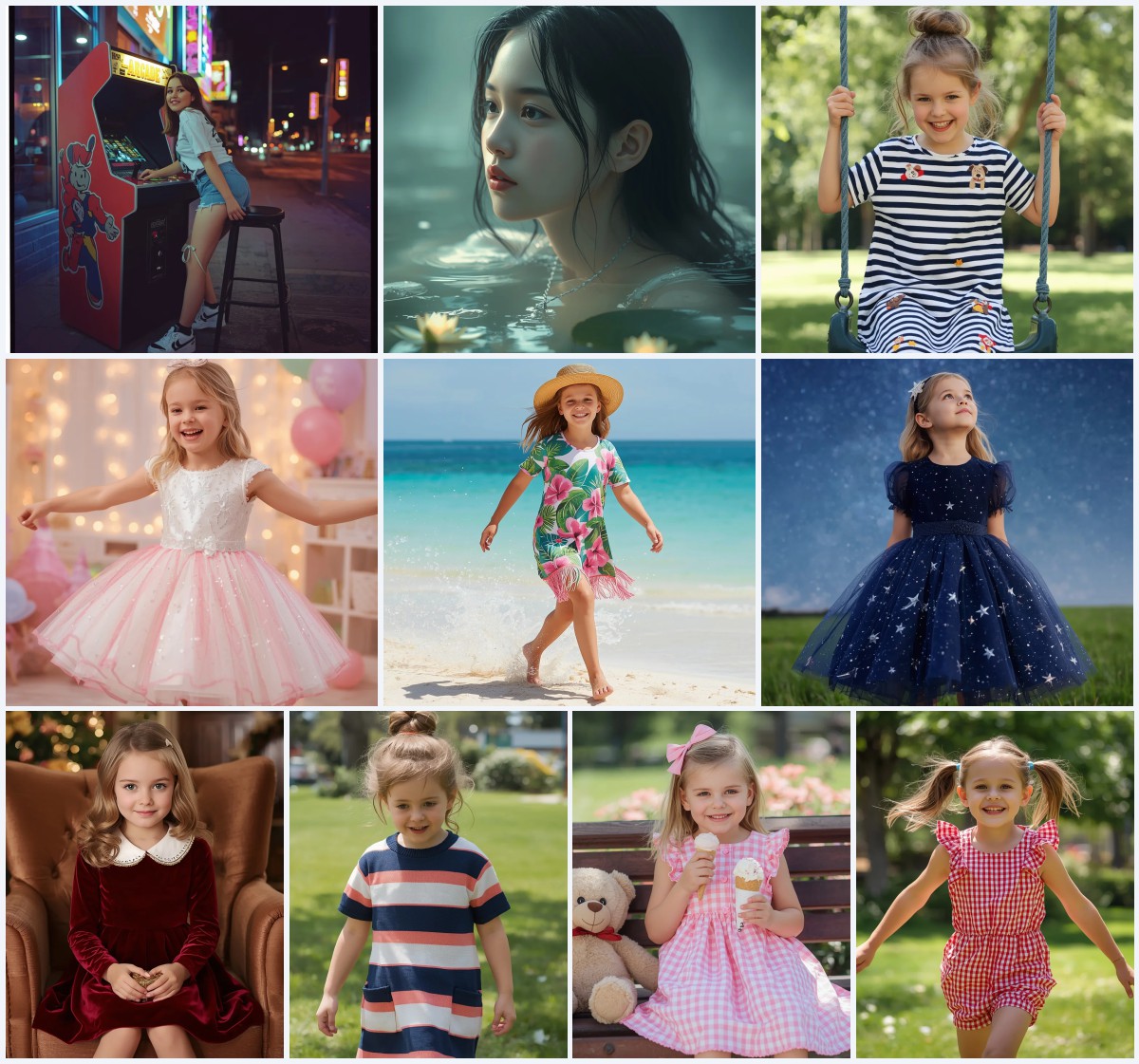


New 10 AI Prompts for Women’s New Instagram Trend for Girl Copy & Paste Fun
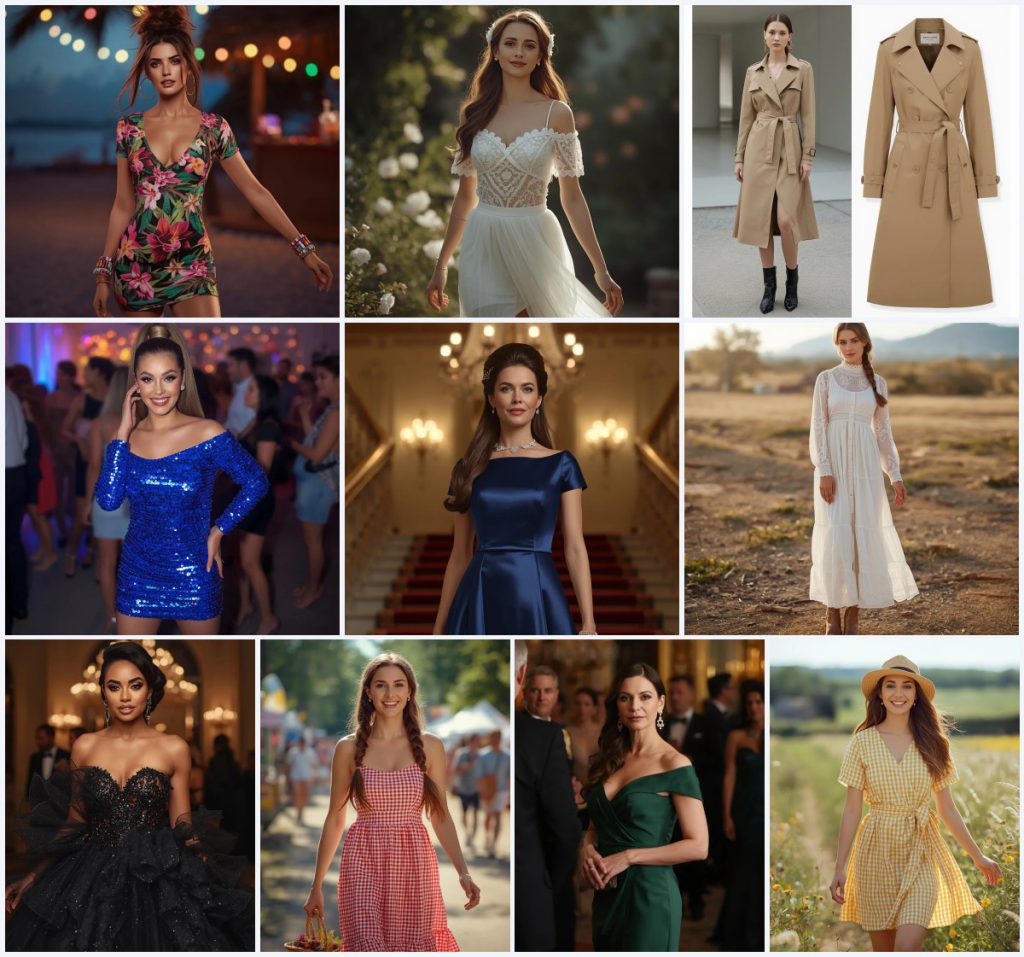
This collection gathers ten AI image prompts built around a single idea: a woman photographed in a distinct dress and a matching setting, with her face taken from an uploaded reference image. The card titles range from a vibrant floral bodycon dress on a dusk beach to a regal satin A-line gown at a diplomatic reception, and from a white lace prairie dress in a sun-drenched field to a sparkly black tulle gown in an opulent hall.
Because these are separate cards rather than one prompt, the article treats them as a set. The shared spine is a full-body or three-quarter portrait, a described outfit with real fabric and accessories, and a background that matches the mood of the dress. You can run any card on its own, or work through the set to compare how the same reference face reads across very different scenes.
What this women's Instagram prompt set is asking for
Every card in this set asks for a photorealistic or editorial photograph of a woman whose face, facial structure, skin tone, and age come from an uploaded reference image. The clothing and location change from card to card, but the structure stays consistent: a described outfit, named accessories, a styled hairstyle, and a background that supports the mood. Several cards also specify a camera-like finish such as 8k or high-resolution, which nudges the model toward clean detail rather than painterly softness.
- A short tropical floral print bodycon dress with a deep V-neck, short sleeves, and a stretchy shimmering fabric on a beach at dusk
- A floor-length white lace maxi skirt with a matching off-shoulder lace top, pearl stud earrings, and a thin silver bracelet in a lush garden
- A beige gabardine trench coat dress with a belted waist, wide lapels, and double-breasted buttons in a clean urban architectural setting
- An electric blue mini dress covered in iridescent sequins with an off-the-shoulder neckline and long sleeves, plus a high bouncy ponytail and glitter eyeshadow
- A deep sapphire blue satin A-line gown with a structured boat neckline and short sleeves, worn at the top of a sweeping staircase in a lavish diplomatic residence
- A floor-length emerald green gown in silk crepe with an off-the-shoulder neckline and a subtle train, worn at a grand embassy ball
The shared scene across these ten cards
The set reads like a wardrobe of occasions. On one side you have bright, relaxed outdoor cards: a woman "posed dancing confidently on a beach at dusk" in a tropical floral bodycon dress, another "walking gracefully amidst blooming flowers in a lush garden" in white lace, and a third "casually strolling through a sunny countryside festival, holding a small basket of flowers" in a red and white gingham maxi dress. These lean on warm light and movement.
The other side is formal and interior. One card places a woman "poised at the top of a sweeping staircase in a lavish diplomatic residence" in sapphire satin, another shows her "standing elegantly at a grand embassy ball, engaging in refined conversation" in emerald silk crepe, and a third frames her in "a grand, opulent hall with soft, glowing chandeliers" in sparkly black tulle. Between those poles sit the trench coat dress in an urban architectural setting and the sequined blue mini dress in a softly blurred party scene with bokeh lights.
Why this collection works for Instagram-style portraits
The set is built to be reused, not admired once. Each card keeps the same reference-face instruction, so you can hold one identity steady while the outfit and location change, which is exactly what a themed feed or a carousel needs. The dress descriptions are specific enough to guide the model without locking it into one exact garment, and the backgrounds are chosen to match the energy of each outfit rather than fight it.
- The reference-image clause keeps the face consistent across all ten cards, so a set of posts still looks like the same person.
- Each card names a real fabric and silhouette, such as gabardine, satin, silk crepe, lace, gingham cotton, or sequins, which gives the model clear texture cues instead of vague 'nice dress' language.
- The locations escalate from beach and garden to embassy ball and gala hall, giving you a natural range of moods from casual to formal in one collection.
Three style directions inside this set
Three style directions stand out across the cards, and all three stay inside the wording of this prompt set. Pick the one that fits the card you are running rather than blending them, because each carries its own lighting and wardrobe logic.
- Ultra-realistic editorial: Cards like the floral bodycon beach shot and the sapphire satin gown ask for an ultra-realistic editorial photograph, so skin, fabric sheen, and background blur should read as a polished magazine frame rather than a snapshot.
- Ethereal cinematic: The white lace garden card and the emerald embassy ball card use ethereal or cinematic language, which favors soft sunlight, graceful motion, and a slightly dreamy depth of field.
- Vibrant celebratory: The sequined blue mini dress and the sparkly black tulle gown lean on vibrant celebratory and party glamour wording, so bokeh lights, glitter, and high energy belong in the frame.
How to run any card in this set
The workflow is the same for all ten cards, and the order matters more than the speed. Start from a clean reference photo, keep the prompt text intact, and review the output before you post it.
- Copy the card. Open the card you want and copy its full prompt text without trimming the clauses about face, hair, outfit, or background.
- Upload a reference. Attach a clear, well-lit photo of the person whose face should appear, ideally a front-facing shot with even lighting and no heavy filters.
- Generate a first pass. Run the prompt once at the model's default settings before changing anything, so you can see how it reads the dress and location.
- Check hands and face. Look closely at fingers, ears, and the jawline, since reference-based portraits often drift in these areas on the first attempt.
- Check the main object. Verify the dress itself: neckline, sleeve length, hem, and fabric sheen should match the card you chose, not a generic gown.
- Refine and re-run. Adjust one clause at a time, such as the background or the accessory list, and regenerate rather than rewriting the whole prompt.
Choosing the reference photo
The reference image does most of the identity work in this set, so it deserves more attention than the prompt text. A sharp, neutral photo gives the model less to guess about.
- Use a front-facing or slightly angled portrait with even daylight and no strong shadows across the face.
- Avoid sunglasses, heavy beauty filters, and extreme makeup, because the prompt already describes hair, earrings, and makeup separately.
- Pick a photo where the hair is visible and not covered by a hat or scarf, since several cards describe long, layered chestnut-brown hair in specific styles.
Tools that handle these prompts well
Any of the major image models can run these cards, but they differ in how faithfully they follow long, detailed clothing descriptions. The table below reflects typical realism and where each tool fits this set.
| Tool | Access | Typical realism | Useful here for |
|---|---|---|---|
| ChatGPT | Web and app, paid tiers for image generation | Good to very good | Rewriting a card's clauses into a shorter version while keeping the tropical floral print bodycon dress and the dusk beach intact. |
| Google Gemini | Web and app, free and paid tiers | Good | Quick iteration on the gingham countryside cards when you want several dress and pose variants in one session. |
| Leonardo AI | Web, free credits with paid plans | Very good with style presets | Testing the ethereal garden card and the sparkly tulle gala card against different lighting presets. |
| Midjourney | Discord and web, paid subscription | Excellent for editorial and cinematic looks | The trench coat dress in the urban architectural setting and the emerald silk crepe embassy ball gown, where fabric drape matters most. |
Tips that improve these portraits
Small wording choices change these images more than big rewrites. The cards already name real materials, so lean on those rather than adding new ones.
- Keep the fabric words exactly as written, such as gabardine for the trench coat dress or silk crepe for the emerald gown, because swapping them changes the drape and sheen.
- Match the accessory list to the scene: gold hoop earrings and colorful bangles suit the beach card, while diamond and sapphire jewelry suits the sapphire satin gown.
- For the gingham cards, keep the basket of flowers or the straw hat in the prompt, since those props anchor the sunny countryside mood.
Common problems and what to change
Most failures in this set trace back to one clause being ignored or one detail being overloaded. Fix the specific clause rather than starting over.
| Issue | What to change |
|---|---|
| The face drifts from the reference photo | Re-upload a sharper front-facing image and keep the strict reference clause about facial structure, skin tone, and age untouched. |
| The dress loses its named fabric or silhouette | Repeat the fabric and cut in the first line of the prompt, for example the stretchy shimmering bodycon or the off-the-shoulder lace top. |
| Hands, ears, or jewelry come out malformed | Shorten the accessory list to one or two items, such as the pearl stud earrings and thin silver bracelet, then regenerate. |
| The background overwhelms the subject | Reduce the background description to one phrase, like the softly blurred party scene with bokeh lights, and keep the woman centered. |
Frequently Asked Questions
Do I need a reference photo for every card in this set?
Most cards in this collection explicitly ask for an uploaded reference image to define the face, facial structure, skin tone, and age. The trench coat dress and sequined mini dress cards are written more loosely, but a reference still helps if you want a consistent person across the set.
Can I mix two cards, like the gingham dress and the embassy ball setting?
You can, but the result usually weakens both. The gingham cards depend on bright countryside light and props like the basket of flowers, while the embassy ball card depends on silk crepe, chandelier light, and a formal pose. Pick one card's outfit and one card's setting at most.
Which card is easiest for a first attempt?
The white lace garden card and the floral bodycon beach card tend to be the most forgiving, because soft sunlight and a blurred background hide small errors in hands and fabric. The sapphire satin gown and the emerald silk crepe gown are harder, since satin and silk show every flaw in drape and lighting.
Conclusion
This collection works best when you treat it as a wardrobe rather than ten unrelated images. Keep one reference photo, run the cards in a sensible order from casual to formal, and check the face, hands, and the named garment before you post. The specific fabric and accessory language in each card is what separates a convincing portrait from a generic dress photo, so preserve those words and change only what the output actually gets wrong.
Only edit and publish photos you have the right to edit, especially when a reference image shows another person.