

New 10 AI Prompts for Sci-Fi, Fantasy, and Surreal Digital Illustrations with Steampunk Elements
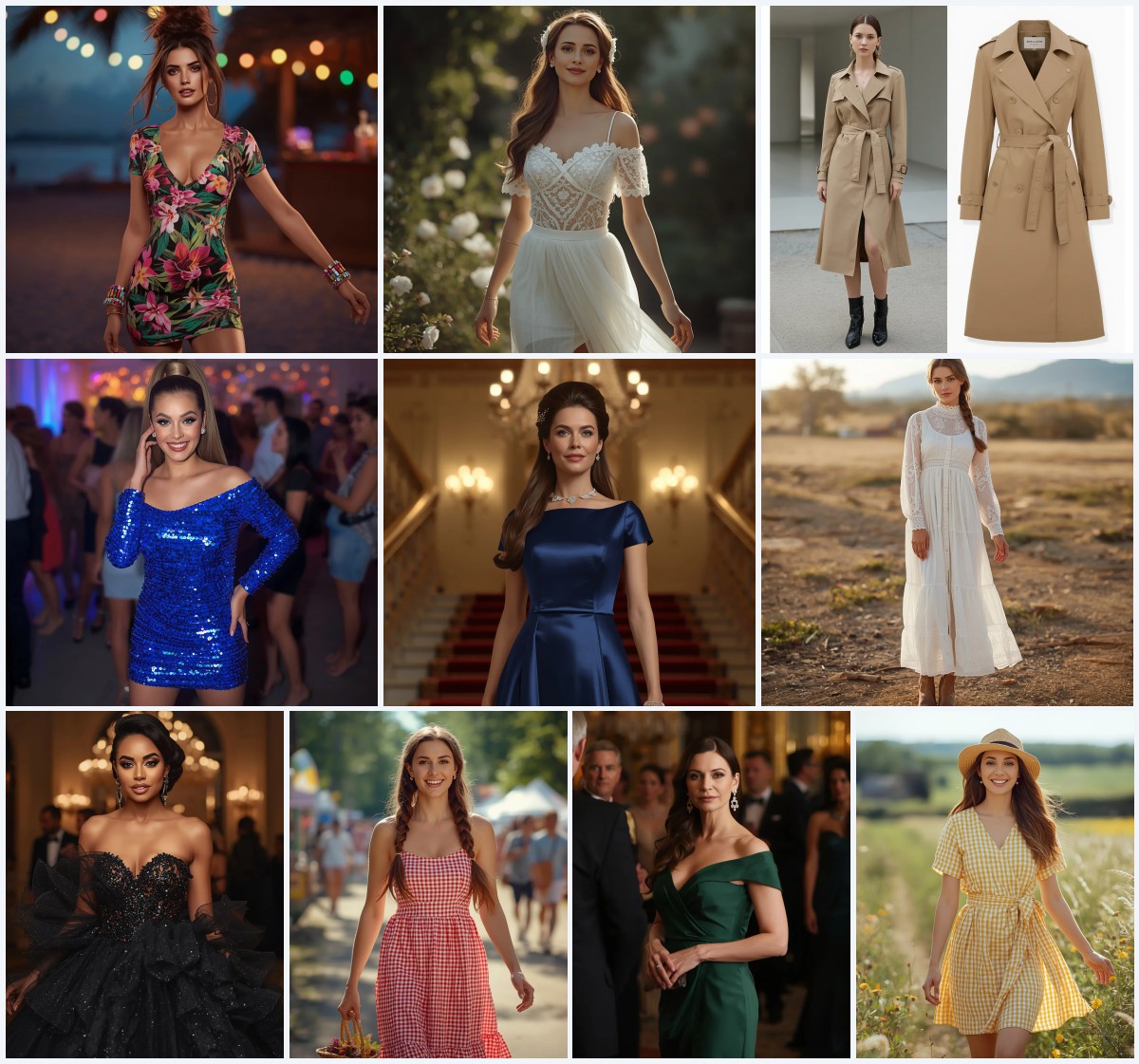
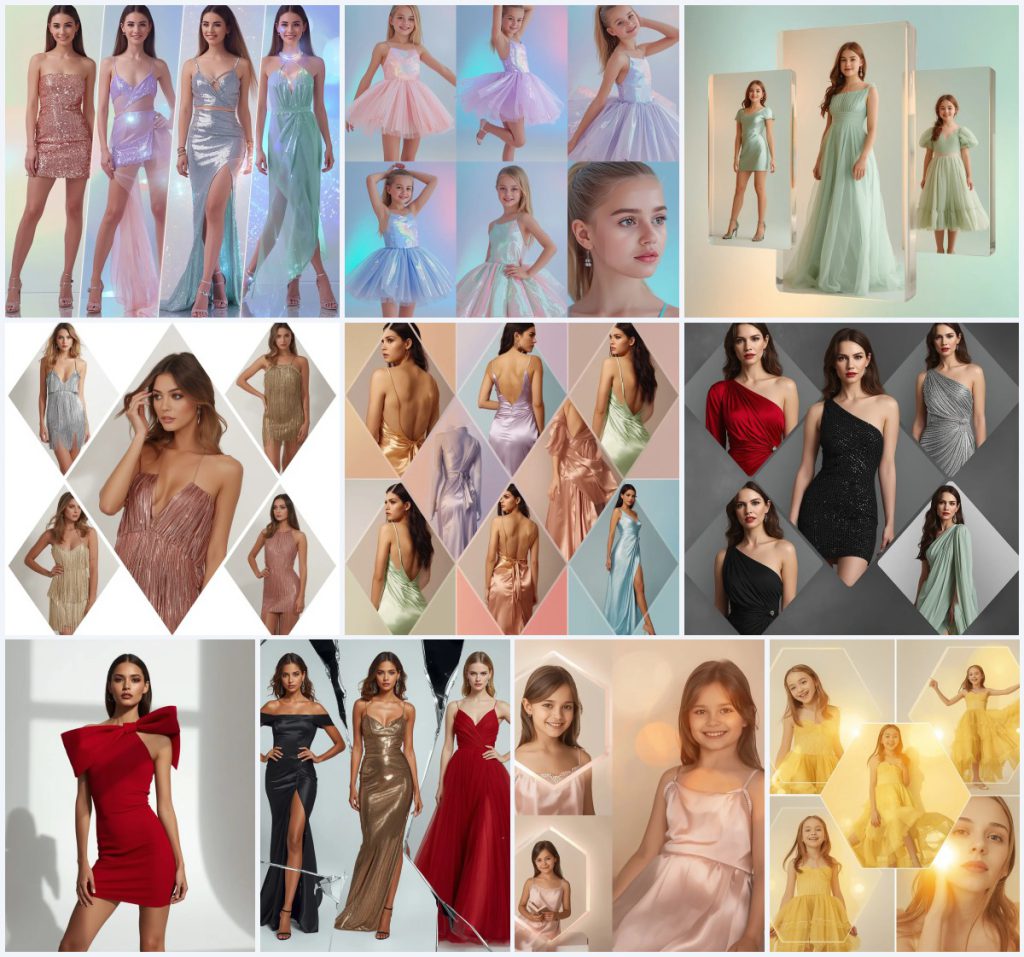
This collection gathers ten AI image prompts that build futuristic fashion collages out of sequins, tulle, satin, organza, fringe, and shattered mirror glass. Each prompt places one beautiful girl or woman inside a multi-frame layout, then dresses her in several different outfits so the final image reads as a small editorial spread rather than a single portrait.
The shared thread is light. Holographic glow, prism panels, diamond-cut frames, and glossy pastel gradients all push the same idea: fabric and reflection should talk to each other. Below is a walkthrough of what these prompts ask for, which styles they can hold, how to run them, and where they usually go wrong.
What these futuristic fashion collage prompts are asking for
Read together, the ten prompts describe one visual family: a beautiful girl or woman shown several times inside a structured or fluid layout, with each frame changing her outfit while the lighting and background stay consistent. The wording stays close to fabric, reflection, and pose, which keeps the model from drifting into generic glamour shots.
- Multiple dress changes inside one image, such as a rose gold mini dress, a lavender sequined slip, a mint green metallic gown, and a baby blue halter dress.
- Layout devices that hold the frames together, including floating glass panels, diamond-cut frame patterns, hexagonal prism panels, and sharp shattered mirror fragments.
- Holographic glow effects that interact with sequins, tulle layers, and satin surfaces rather than sitting on top of them.
- Pose variety across frames: confident standing, joyful laughing, playful spinning, seated with a book, side profiles, and close-up glowing expressions.
- Consistent lighting language such as soft yet dynamic light with reflective highlights, cinematic soft highlights, or warm peach-and-gold light leaks.
- Simple backdrops that keep attention on the clothes: glossy pastel gradients, clean white studio space, and minimal gradient grounds.
The scene inside each collage
Every prompt builds a small stage. In the sequined cocktail set, "each frame displays a different color dress" and "the holographic reflections interact subtly with the sequins and fabric textures," so the collage reads as a moving fashion reel rather than a static sheet. The tulle version swaps sequins for soft layers and keeps "a glossy pastel gradient" behind the model.
The diamond-cut and mirror sets tighten the geometry. Here "the diamond shapes create a sharp yet elegant structure with depth," and in the avant-garde version "the sharp lines of the broken glass create dynamic depth and high-fashion drama." The prism sets soften that idea again, using "hexagonal prism panels that cast warm peach-and-gold light leaks" or bright warm yellow leaks across a clean studio.
Three styles these prompts can hold
These prompts can be pushed in three directions while staying inside the same collage structure, the same dress list, and the same lighting notes. Each direction below keeps the frames, the model, and the reflective surfaces intact.
- Futuristic fashion editorial: Keep the holographic glow, the sequins, and the glossy pastel gradient so the collage looks like a magazine spread from a near-future issue.
- Whimsical glass-panel collage: Lean on the floating glass panels and soft-focus depth for a lighter, dreamier version where the mint green dresses seem to drift between frames.
- Avant-garde mirror drama: Use the shattered mirror fragments, the diamond-cut frames, and high-contrast studio light to turn the same dress list into something sharp and theatrical.
How to run these prompts without losing the layout
The prompts are long, and long prompts reward careful handling. Copy the text exactly, keep the frame structure, and change only what you actually want to change. The steps below keep the collage readable from first draft to final render.
- Copy the prompt. Paste the full text of the collage you want, keeping the frame description, dress list, pose list, and lighting line together.
- Upload a reference. Add a clear photo of the model if you want her face to stay consistent across frames, or skip this for a fully invented character.
- Generate the first pass. Run the prompt once without edits so you can see how the model handles the frame layout before you tune anything.
- Check the hands. Look at every visible hand, since spinning, seated, and holding-a-book poses are the most likely places for extra or fused fingers.
- Check the face. Compare the face across frames, because multi-frame layouts often drift into slightly different people in each panel.
- Check the main object. Confirm the hero dress in each frame matches the color and fabric named in the prompt, such as the silver fringe mini dress or the lemon yellow tiered organza dress.
Choosing the reference photo
A reference photo is optional, but it decides how consistent the girl looks across the collage. Pick one image and treat it as the anchor for every frame.
- Use even, front-facing light so the model's features survive the pastel gradients and prism leaks in the final render.
- Choose a photo where the body is visible from at least the waist up, since the prompts ask for full-body movement, side profiles, and close-ups in the same image.
- Avoid heavy filters or strong colored light on the reference, because the prompt already adds holographic glow and reflective highlights on top.
Which tools handle these collages best
These prompts mix layout, fabric, and reflection, and not every generator treats all three equally well. The table below maps the four common tools to what they actually do with this set.
| Tool | Access | Typical realism | Useful here for |
|---|---|---|---|
| ChatGPT | Web and mobile chat | Good with clear instructions, softer on fine fabric | Rewriting the frame list so the diamond-cut segments and the dress colors stay in order. |
| Google Gemini | Web and mobile app | Strong color and lighting, mixed on layout | Keeping the glossy pastel gradient and the holographic glow balanced across frames. |
| Leonardo AI | Free tier plus paid plans | High realism with the right model | Rendering the sequined cocktail dresses and the reflective highlights at 85mm. |
| Midjourney | Discord and web app | Very high realism, strong stylization | The shattered mirror fragments and the avant-garde red carpet gowns with sharp broken-glass depth. |
Small adjustments that improve the result
Most fixes here are about naming real materials and objects instead of adding vague mood words. The three tips below stay inside the vocabulary the prompts already use.
- Name the exact fabric when you edit, such as satin slip, tulle layers, organza puff sleeves, or metallic fringe, because the model treats each one differently.
- Keep the frame device consistent, so a diamond-cut prompt does not suddenly grow hexagonal prism panels halfway through the image.
- Repeat the lighting line when you shorten anything, since phrases like cinematic with soft highlights or warm peach-and-gold light leaks are what hold the collage together.
Common failures and what to change
These prompts fail in fairly predictable ways, mostly around layout and fabric. The table lists the four most common problems and the smallest edit that usually fixes each one.
| Issue | What to change |
|---|---|
| Frames merge into one flat image | Reinforce the frame device in the prompt, naming diamond-cut segments, floating glass panels, or hexagonal prism panels again. |
| Dress colors repeat across frames | List the colors in a fixed order, such as rose gold, lavender, mint green, and baby blue, and ask for one color per frame. |
| Hands or fingers break during spinning or seated poses | Simplify the pose list to standing and close-up frames, or generate those poses separately and composite them. |
| Holographic glow washes out the fabric texture | Lower the glow wording and keep the fabric clause intact, so sequins and tulle layers still read as real material. |
Frequently Asked Questions
Can I run these prompts as single portraits instead of collages?
Yes, but you lose the point of the set. The frame devices, the dress list, and the pose variety are what make the image read as a fashion spread, so a single portrait will look like a normal studio shot.
Do I need a reference photo for the girl to stay the same across frames?
It helps a lot. Without a reference, generators often drift into a slightly different face in each panel, especially when the prompt asks for both close-ups and full-body movement.
Which prompt in this collection is easiest for a beginner?
The lemon yellow organza collage and the rose satin slip collage are the simplest, because the prism panels and the clean studio background give the model fewer competing structures to resolve.
Conclusion
This collection works best when you treat each prompt as a small editorial system rather than a one-line idea. Keep the frame device, the dress list, the pose list, and the lighting line together, and the collage will hold. Trim any of those four and the image usually collapses into a single soft portrait with a pastel background.
Start with one prompt, run it unchanged, and study where it breaks before you edit anything. Most adjustments come down to naming a real fabric or repeating the frame structure, not adding new mood words. Once the layout is stable, the holographic glow and the reflective highlights finally have somewhere to sit.
Edit only photos you own or have clear permission to use, and keep that right on file before you publish the result.