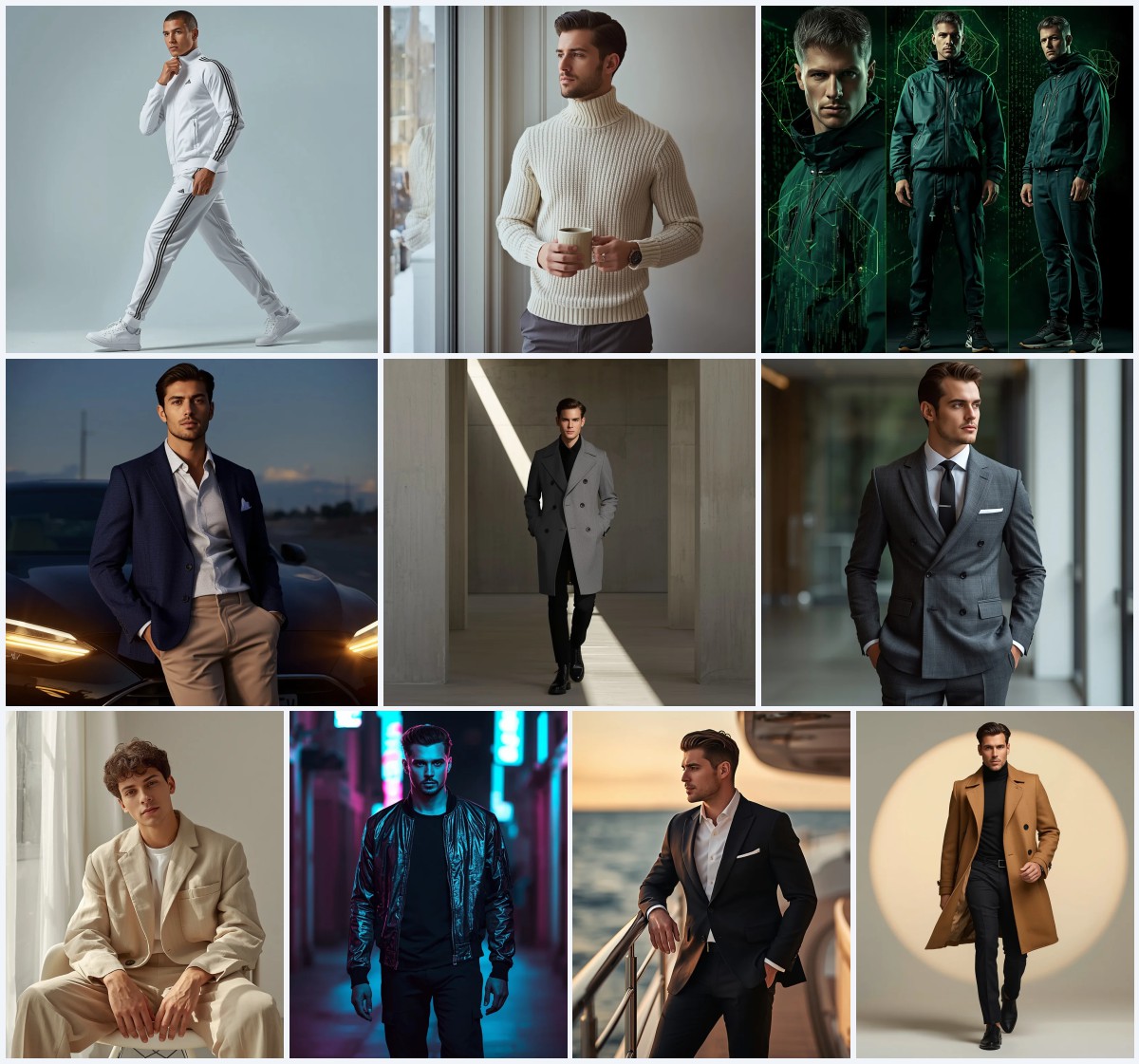


Best 10 Stylish Men’s AI Image Prompts for Handsome Cinematic Portrait Photography with Classic Cars
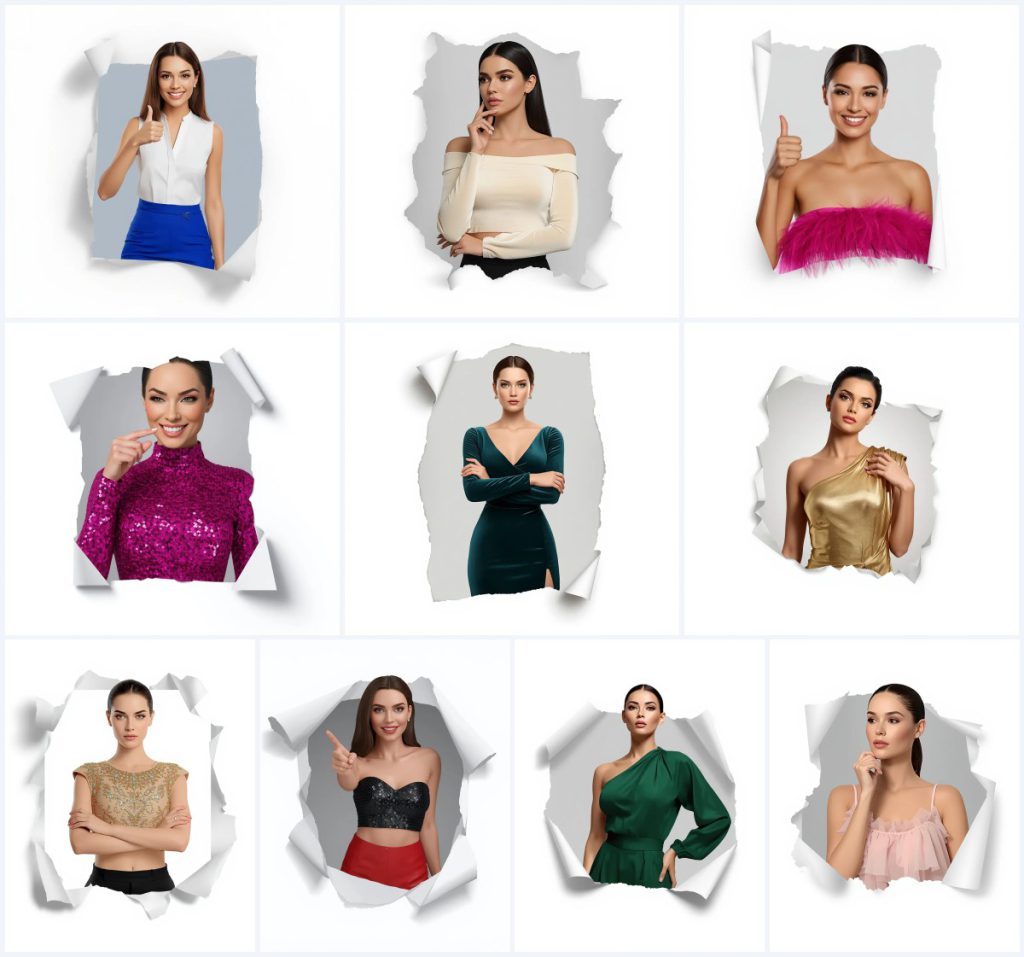
This collection gathers ten stylish men's AI image prompts built around one shared visual idea: a torn-paper reveal where a handsome man steps out of a ripped opening as if the page itself could not hold him. Each card changes the outfit, the pose, and the mood, but the core stage stays the same, so the set feels like one cinematic series rather than ten unrelated pictures.
The titles in the set include A Cheerful Woman Giving Thumbs-Up in a Vibrant Cobalt Blue Mini Skirt, A Thoughtful Woman in a Luxurious Cream Velvet Off-Shoulder Top, A Winking Woman in a Dazzling Fuchsia Sequin Bodycon Dress, A Calm Woman with Arms Crossed in an Opulent Teal Velvet Gown, A Cool and Stylish Woman in a Modern Gold Metallic Mini Dress, and A Thoughtful Woman in a Delicate Pastel Pink Chiffon Dress. Read together, they show how small changes in fabric, gesture, and color shift the same torn-paper portrait into a different character every time.
What this torn-paper portrait collection is asking for
The set is a group of ten prompt cards that share one clean studio concept and vary the styling. Every card asks for a polished 3D render of a beautiful woman who keeps the same facial identity across all frames. She appears to push through a torn paper hole, with ripped edges wrapping around her half-body, and only her chest-up is visible inside a 4:5 vertical frame. The light is soft and even, the background is locked pure white, and the pose or expression is the main variable from card to card.
- A torn paper hole with realistic ripped edges wrapping around the half-body
- A 3D popping-out effect against a subtle light grey gradient inside the hole
- A chest-up crop framed in a 4:5 vertical aspect ratio
- Soft studio lighting with smooth highlights and no harsh shadows
- A locked pure white background with no gradient or color shift
- Consistent facial identity and features across all frames
The shared scene inside every card
The scene is a studio illusion. The prompt describes the subject as an "ultra-clean, high-resolution, sharp, polished 3D render" who "appears to emerge through a torn paper hole," and the ripped edges are specified to wrap "naturally around her half-body." That torn opening is not decoration; it is the frame, and it sits over "a subtle light grey gradient inside the paper hole" while the rest of the background stays a flat white.
Because only the upper body is shown, the pose and the clothing carry the whole story. One card catches her "in a moment of" quiet thought, another has her "winks playfully," and a third shows her standing "with a serene" calm while her arms are crossed. The result is a small cast of characters sharing one set, one light, and one reveal.
Why this collection works so well
The idea is strong because it turns a simple portrait into a small piece of stagecraft. The torn paper gives the image a physical depth that a plain studio shot lacks, and the fixed white background keeps the focus entirely on the person and the fabric.
- The torn-paper reveal creates a 3D popping-out effect that makes the subject feel present rather than pasted on.
- The locked white background and soft studio light make the set look consistent, so ten cards read as one series.
- The outfit and pose changes are small, which means anyone can reuse the same prompt and still get a fresh character.
Three looks that live inside this prompt
Three styles are already written into the prompt, and each one stays inside the same torn-paper studio. You do not need to leave the concept to change the mood; the card titles show how fabric and gesture do the work.
- Polished 3D render: The prompt asks for an ultra-clean, high-resolution, sharp, polished 3D render, so skin, fabric, and paper edges all read as smooth and deliberate.
- Soft studio portrait: Even, clean lighting with no harsh shadows keeps the face open and the highlights smooth, which suits a chest-up crop.
- Playful character portrait: A wink, a thumbs-up, or crossed arms turns the same torn-paper frame into a different personality without changing the set.
How to run one of these cards step by step
Pick one card from the set, copy its prompt text exactly, and keep the shared clauses about the torn hole, the 4:5 frame, and the white background. Then add your own reference face if you want a specific person, generate a first pass, and inspect the result before you spend time on small tweaks.
- Choose a card. Open one title from the set, such as the cream velvet off-shoulder top or the teal velvet gown, and read its full text.
- Copy the prompt. Copy the prompt exactly, including the torn paper hole, the 4:5 vertical aspect ratio, and the locked pure white background.
- Upload a reference. If you need a specific face, upload a clear, well-lit reference photo and keep the identity clause in the prompt.
- Generate a first pass. Run the prompt once and judge the pose, the fabric, and the torn edges before changing anything.
- Check hands, face, and the main object. Look at the hands for extra fingers, the face for drift from the reference, and the torn paper edges for smudged or fake-looking rips.
- Refine one thing at a time. Adjust only the pose, the fabric, or the rip shape, then regenerate so you can see what actually caused the change.
Choosing the reference photo
A good reference photo does most of the work when you want a recognizable person inside the torn-paper frame. The prompt already fixes the crop and the light, so your job is to give the model a clean face to hold on to.
- Use a front-facing or slightly angled shot with even light and no heavy shadows across the face.
- Keep the head and shoulders clear of busy backgrounds so the model reads the features, not the room.
- Avoid sunglasses, hats, or hands covering the face, since the chest-up crop depends on a visible expression.
Which tools handle this prompt best
These cards mix a precise studio setup with a specific 3D render look, so the tool matters. Some platforms follow the torn-paper geometry closely, while others are better at fabric and face. Test one card on two tools before you commit to a full set.
| Tool | Access | Typical realism | Useful here for |
|---|---|---|---|
| ChatGPT | Web and app, paid tiers for image work | Good to high, strong at following long instructions | Holding the full clause about the torn paper hole and the locked pure white background in one pass. |
| Google Gemini | Web and app, free and paid tiers | Good, improving quickly on portraits | Quick drafts of the chest-up crop and the 4:5 vertical frame before you refine the fabric. |
| Leonardo AI | Web, free credits with paid plans | High, with fine control over render style | Pushing the ultra-clean, high-resolution, sharp, polished 3D render look and the subtle grey gradient inside the hole. |
| Midjourney | Web and Discord, paid plans | Very high, especially on lighting and texture | Getting the soft studio lighting and the realistic ripped edges wrapping around the half-body. |
Small tips that improve the result
Most of the quality comes from respecting the objects the prompt already names. The torn paper, the fabric, and the white background are the three things viewers notice first, so protect them.
- Keep the torn paper hole clean and readable, because messy or doubled rips break the popping-out effect faster than anything else.
- Match the fabric to the card you chose, so a fuchsia sequin bodycon dress stays sequined and a cream velvet off-shoulder top keeps its soft sheen.
- Hold the pure white background flat, since any color shift or gradient outside the paper hole pulls attention away from the subject.
Common problems and what to change
These prompts are detailed, but they can still fail in predictable ways. When something looks wrong, change one clause rather than rewriting the whole card.
| Issue | What to change |
|---|---|
| The torn paper edges look flat or painted on | Strengthen the wording about realistic ripped edges wrapping naturally around the half-body, and add depth to the popping-out effect. |
| The face drifts from the reference photo | Repeat the identity clause and use a sharper, evenly lit reference image with the head and shoulders clearly visible. |
| The background picks up a tint or gradient | Restate that the background is a single cool, crisp pure white, locked without gradient or color shift. |
| The fabric loses its texture | Name the material again, such as velvet, sequin, or faux leather, and keep the soft studio lighting so highlights stay smooth. |
Frequently Asked Questions
Can I use these cards for a man instead of a woman?
Yes. The shared scene is the torn paper hole, the 4:5 frame, and the white studio background, so you can swap the subject description and keep the rest of the prompt intact.
Why does the prompt insist on the same face across all frames?
Because the set is meant to read as one person in different outfits. The identity clause keeps the features stable so the cards look like a series rather than ten strangers.
Do I need to change the prompt for each card in the set?
Only the outfit, the pose, and the color line need to change. The torn paper hole, the soft studio lighting, and the locked white background should stay the same in every card.
Conclusion
The Best 10 Stylish Men's AI Image Prompts for Handsome Cinematic Portrait Photography with Classic Cars works because it does one thing very well: it puts a person through a torn paper hole under soft studio light and lets fabric and gesture carry the variety. Copy one card, keep the shared clauses, and check the hands, the face, and the torn edges before you move on to the next look.
Only edit and upload a reference photo that you own or have clear permission to use.