

Best 10 Masterpiece AI Prompts for Hyper Realistic Digital Sculptures of Mythological Figures
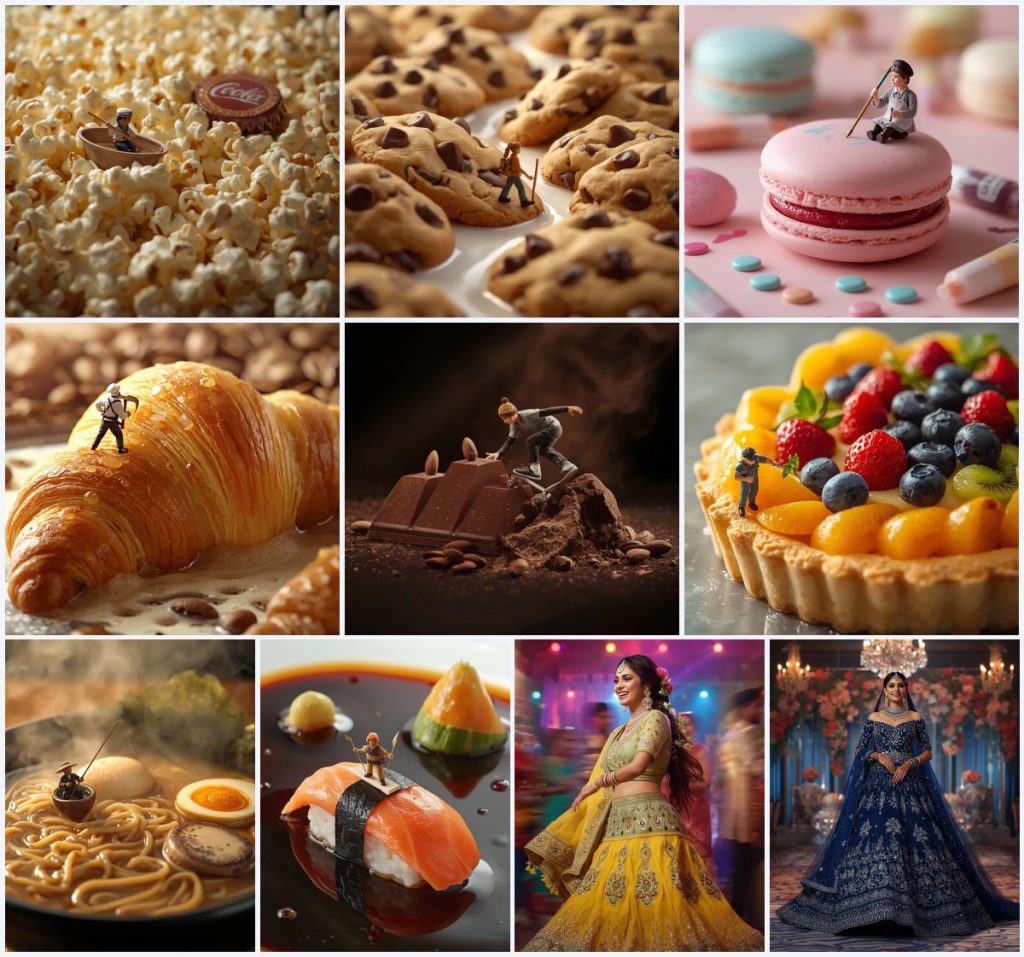
This collection gathers ten distinct AI image prompts that share one goal: turning ordinary subjects into hyper-realistic digital sculptures of mythological figures and miniature worlds. The set includes titles such as 'A Miniature Sailor Navigating a Giant Bowl of Popcorn', 'A Miniature Hiker Exploring a Giant Cookie Forest', 'A Miniature Artist Painting a Giant Macaron Landscape', 'A Miniature Baker's Ascent of a Croissant Mountain', 'A Miniature Skater's Tricks on a Giant Chocolate Bar', 'A Miniature Gardener Tending a Giant Fruit Tart Landscape', 'A Tiny Fisherman's Catch in a Giant Bowl of Ramen Noodles', 'A Miniature Adventurer's Journey Across a Giant Sushi Roll', 'Bridal Sangeet Lehenga with Intricate Dance-Ready Details', and 'Opulent Reception Gown with Lavish Jewel-Toned Decor'. Each prompt builds a scene where scale, material, and light do the heavy lifting.
The shared scene is a staged macro or portrait moment where a tiny human figure interacts with oversized food or where a bride stands inside a richly decorated ceremony. The prompts ask for cinematic lighting, shallow depth of field, and photorealistic textures. This article explains what the set asks for, how to read the clauses, which styles stay inside the prompts, and how to generate, check, and fix results without losing the intended realism.
What this mythological and miniature sculpture set is asking for
The collection asks for hyper-realistic digital sculpture energy: subjects that look physically present, with believable scale, surface detail, and light. Some prompts place a miniature person inside a giant food landscape, while two prompts focus on Indian bridal wear in festive settings. Across the set, the wording pushes for macro photography realism, sharp focus, and premium advertising quality. The aim is not a cartoon or a rough sketch but a polished image that could pass as a studio photograph of a tiny diorama or a real bridal portrait.
- A miniature figure occupying roughly 20% to 30% of the frame, such as a sailor, hiker, artist, baker, skater, gardener, fisherman, or adventurer.
- A giant food or object environment: a bowl of popcorn, a cookie forest, a macaron, a croissant mountain, a chocolate bar, a fruit tart, a ramen bowl, or a sushi roll.
- Tiny props that define the character: a paper cup boat, a matchstick oar, a pretzel stick staff, a toothpick spear, a tiny rope and pickaxe, or a small straw hat.
- Material details that sell realism: visible salt crystals, melted butter, chocolate chips, macaron 'pied', flaky croissant layers, glossy chocolate snap lines, dew-kissed fruit, or nori seaweed sheets.
- Lighting and camera language: dramatic low-angle lighting, studio lighting, soft diffused light, warm golden hues, cinematic macro photography, and shallow depth of field.
- Bridal specifics in the two portrait prompts: a yellow and green lehenga with mirror work and tassels, or a sapphire blue reception gown with crystals, sequins, and silver embroidery.
The shared scene across these ten prompts
Most prompts build a single frozen moment of exploration or performance. A miniature sailor 'sailing across a vast sea of fluffy, buttered popcorn' uses a matchstick as an oar. A miniature hiker 'trekking through a dense forest of giant chocolate chip cookies' carries a tiny backpack and uses a pretzel stick as a walking staff. A miniature baker 'scaling a giant, golden-brown croissant' with a tiny rope and pickaxe turns pastry layers into climbing holds. A miniature skater 'performing daring tricks on a massive, perfectly sculpted dark chocolate bar' treats snap lines as ramps. A tiny fisherman 'casting his line into a giant bowl of steaming ramen noodles' sits in a boat made from a ceramic spoon. A miniature adventurer 'navigating a giant maki sushi roll floating on a glistening pool of soy sauce' uses a nori strip as a raft.
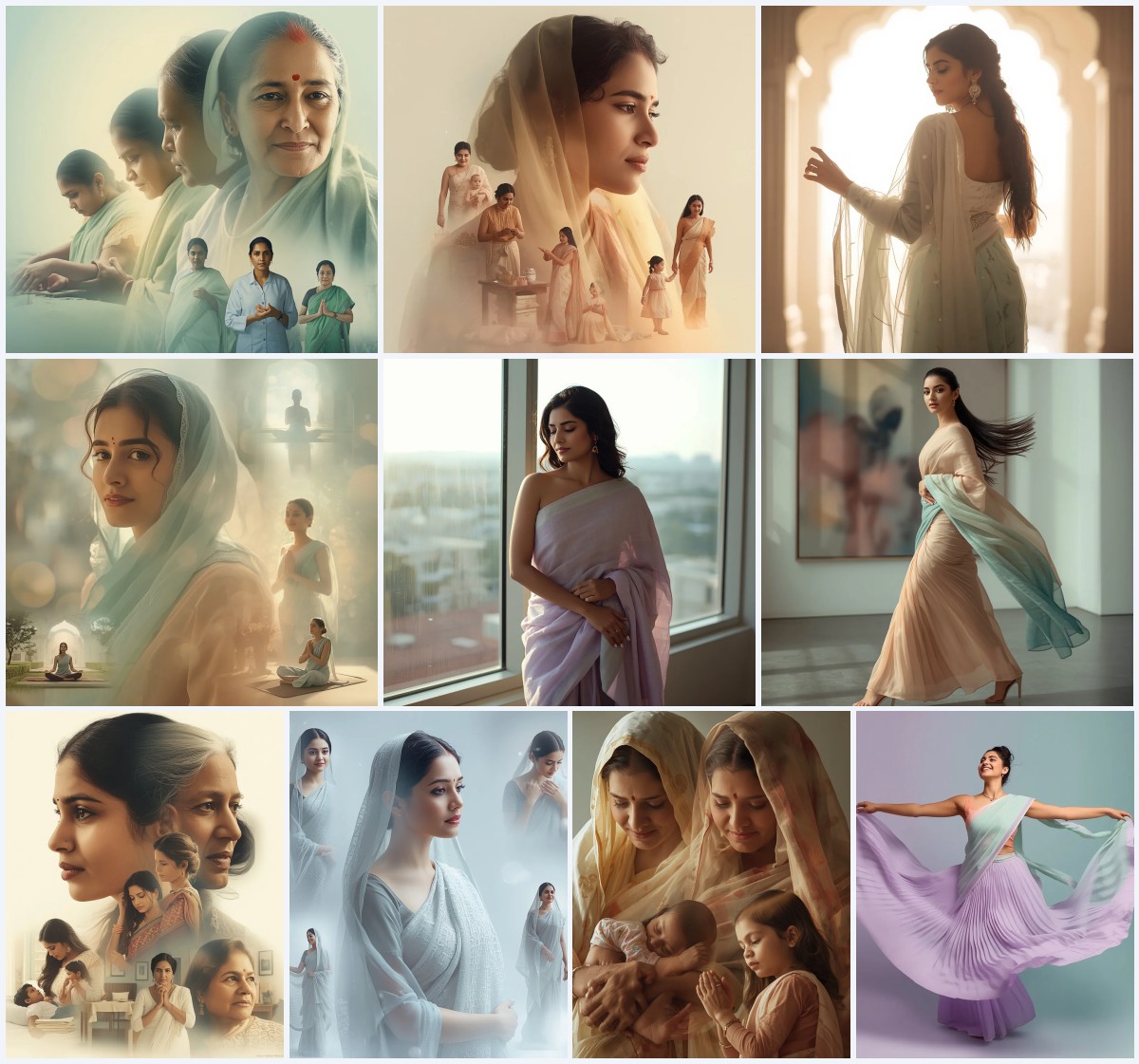
The two bridal prompts shift to a human-scale celebration. One captures a bride 'mid-dance, laughing, surrounded by colorful stage lighting and blurred festive decor' in a lehenga with 'intricate threadwork, mirror work, and delicate tassels'. The other shows a bride 'making a grand entrance at her wedding reception' in a sapphire blue gown with 'shimmering crystals, sequins, and intricate silver embroidery'. Both keep the same high-realism target as the miniature scenes, using 85mm lens language, HDR, and 4k resolution to hold detail.
Why this set works for hyper-realistic digital sculpture looks
The prompts succeed because they combine a clear scale contrast with specific material cues and camera direction. The miniature figure gives the eye a human anchor, while the giant food or bridal fabric provides texture that AI models can render with convincing light. The result feels like a physical sculpture or a studio photograph rather than a flat illustration.
- Scale contrast creates immediate drama: a 20% to 30% figure against a giant popcorn sea, cookie forest, or ramen bowl makes the scene read as a miniature diorama.
- Material specificity drives realism: salt crystals, butter sheen, macaron 'pied', flaky croissant layers, glossy chocolate, dew-kissed fruit, and nori sheets give the model concrete surfaces to render.
- Camera and lighting language locks the mood: cinematic macro photography, shallow depth of field, dramatic low-angle lighting, and 85mm lens references push the output toward premium advertising or bridal portraiture.
Three styles that stay inside this prompt set
You can lean into three styles without leaving the collection's boundaries. Each one uses language already present in the prompts, so you are not inventing a new genre. The set supports cinematic macro food photography, premium advertising realism, and festive bridal portraiture.
- Cinematic macro food photography: Use the prompts' own terms like 'cinematic macro photography', 'sharp focus', and 'shallow depth of field' to keep the miniature food scenes looking like high-end studio shots.
- Premium advertising realism: The phrases 'premium snack advertising', 'premium bakery advertisement style', 'premium confectionery advertising', and 'premium patisserie advertising' support a polished commercial look with rich textures and controlled light.
- Festive bridal portraiture: The two bridal prompts use 'Ultra realistic rendering, dynamic motion, shallow depth of field, 85mm lens, HDR, 4k resolution' to frame a joyful, celebratory portrait without turning it into a fantasy illustration.
How to generate these images step by step
Work through the set one prompt at a time, and keep the reference and the output checks consistent. The steps below cover copying the prompt, uploading a reference if you have one, generating, and inspecting the three areas most likely to fail: hands, face, and the main object. Because the collection mixes miniature scenes and bridal portraits, adjust the reference type to match the prompt you are running.
- Copy the prompt. Paste the full prompt text for the specific title you want, such as the popcorn sailor or the sapphire reception gown, without shortening the lighting and texture clauses.
- Upload a reference. If you have a photo of a similar miniature diorama or a bridal outfit, upload it as a style or composition reference, but do not let it override the prompt's scale and material details.
- Generate the image. Run the prompt at the stated aspect ratio, such as 4:5 portrait for the chocolate bar skater, and generate a few variations before judging quality.
- Check hands. Look at the miniature figure's hands holding the matchstick oar, pretzel staff, tiny brush, rope, or toothpick spear, and fix any fused or extra fingers.
- Check face. Inspect the sailor's, hiker's, baker's, or bride's expression for distortion, and confirm the bridal prompts keep a radiant, joyful look rather than a blank stare.
- Check the main object. Verify the popcorn kernels, cookie chips, macaron pied, croissant layers, chocolate snap lines, fruit tart glaze, ramen noodles, sushi rice, lehenga mirror work, or gown crystals read as intended.
Using a reference photo with this set
A reference photo helps most when it matches the prompt's core subject. For the miniature scenes, a macro photo of the food item gives the model real texture to borrow. For the bridal prompts, a full-length portrait with clear fabric detail works better than a close-up. Keep the reference clean and well lit so the model does not inherit noise or harsh shadows.
- For food scenes, use a sharp macro shot of popcorn, cookies, a macaron, a croissant, chocolate, a fruit tart, ramen, or sushi so the model can copy surface detail like butter sheen or rice grains.
- For bridal scenes, use a full-length photo of a lehenga or gown with visible embroidery, mirror work, tassels, crystals, or sequins, and keep the pose energetic if you want the 'mid-dance' feel.
- Avoid references with heavy filters, motion blur, or cluttered backgrounds, because the prompts already specify shallow depth of field and premium lighting that can conflict with a noisy source.
Which tools handle these prompts best
Different generators interpret the set's mix of miniature scale and bridal detail in different ways. The table below compares four common tools on access, typical realism, and what each one is useful for in this specific collection. Use it as a starting point, then test the prompt that matters most to you.
| Tool | Access | Typical realism | Useful here for |
|---|---|---|---|
| ChatGPT | Web and app, paid tiers for image generation | Good for prompt refinement and moderate realism | Rewriting the popcorn sailor prompt to emphasize 'visible salt crystals and melted butter glistening' before you generate. |
| Google Gemini | Web and app, free and paid tiers | Solid for descriptive scenes and text-heavy prompts | Expanding the cookie forest prompt while keeping 'a stream of milk flows through the cookie forest' intact. |
| Leonardo AI | Web, free credits and paid plans | Strong for cinematic macro and product-style images | Rendering the macaron artist prompt with 'soft, diffused lighting' and the macaron's 'pied' visible. |
| Midjourney | Discord and web, paid subscription | High realism with strong lighting and texture | Producing the sapphire reception gown prompt with 'shimmering crystals, sequins, and intricate silver embroidery' clearly readable. |
Three practical tips for this collection
Small changes to wording can protect the realism these prompts are built for. Focus on the materials and objects that carry the scene, and keep the scale language exact. The tips below name real items from the prompts so you can apply them directly.
- Keep the scale percentage: if the prompt says the miniature sailor is 'about 20% of the frame' or the hiker is 'approximately 25% of the frame', do not remove that clause, or the figure may grow and break the diorama illusion.
- Protect the signature material: for the croissant mountain, keep 'flaky, buttery layers' and 'butter droplets glisten'; for the chocolate bar skater, keep 'glossy and segmented' with 'visible snap lines' so the surface does not turn into a plain brown slab.
- For bridal prompts, preserve fabric specifics like 'mirror work, and delicate tassels' on the lehenga or 'crystals, sequins, and intricate silver embroidery' on the gown, because these details are what separate a generic dress from the intended look.
Common issues and what to change
These prompts can fail in predictable ways, especially around scale, texture, and human anatomy. The table lists four failures you are likely to see and the exact change that helps. Adjust one variable at a time so you can tell which fix worked.
| Issue | What to change |
|---|---|
| The miniature figure looks full-sized and the food looks small | Re-add the scale clause, such as 'about 20% of the frame' or 'approximately 25% of the frame', and mention 'seamless miniature scale' explicitly. |
| Food textures turn flat or plastic-like | Strengthen material words from the prompt, like 'visible salt crystals and melted butter glistening', 'flaky, buttery layers', or 'dew-kissed fruit', and avoid vague terms like 'realistic food'. |
| Hands or faces on the tiny figure are distorted | Reduce competing details, generate at a higher resolution, and add a clause that the miniature figure's hands and expression are 'sharp focus' and clearly visible. |
| The bridal outfit loses its embroidery or jewelry detail | Repeat the fabric specifics, such as 'mirror work, and delicate tassels' or 'shimmering crystals, sequins, and intricate silver embroidery', and keep 'Ultra realistic rendering' and 'HDR' in the prompt. |
Frequently Asked Questions
Can I use these prompts for a single image or a series?
Yes. Each title in the collection works as a standalone prompt, but you can also run several together as a series by keeping the same lighting and camera language, such as 'cinematic macro photography' and 'shallow depth of field', across the miniature scenes.
Do I need a reference photo to get hyper-realistic results?
No, but a reference helps. For the food scenes, a macro photo of popcorn, a croissant, or sushi gives the model real texture. For the bridal prompts, a full-length photo of a lehenga or gown with visible embroidery and crystals improves fabric detail.
Why do my miniature figures keep looking too large?
The scale clause is usually the cause. Keep phrases like 'about 20% of the frame' or 'approximately 25% of the frame' and add 'seamless miniature scale' so the model understands the figure is tiny against the giant food or object.
Conclusion
This collection of ten prompts offers a clear path to hyper-realistic digital sculpture looks, whether you want a miniature sailor on a popcorn sea or a bride in a sapphire reception gown. The strength of the set is its specificity: scale percentages, material details, camera language, and lighting all work together. Copy the prompt you want, upload a matching reference if you have one, generate a few variations, and check hands, face, and the main object before you settle on a final image. With small adjustments, the results can look like a premium studio photograph rather than an AI generation.
Only edit and publish photos you have the right to edit, and respect the original photographer's license.